Examples

Looking for detailed instructions on usage? Then try our tutorials.

Examples are grouped according to Caedium add-ons:

CFD Analysis of a Sail Yacht from SketchUp

A sail yacht is a great example of an aerodynamic vehicle that relies totally on the wind for propulsion. And you guessed it, where there's aerodynamics there's also an opportunity for Computational Fluid Dynamics (CFD) to make an impact. CFD has been a primary tool in the aerodynamic optimization of many recent sail yachts. This is especially true in competitive sail yacht design, such as the yachts that compete for the America's Cup. If your budget doesn't extend to the scale of Larry Ellison's then fear not, you can still benefit from CFD analysis of your yacht design in combination with Google SketchUp and Caedium Professional.

Streamlines Around a Sail YachtStreamlines Around a Sail Yacht

Aerodynamic Study of a Kyosho Mini-Z RC Model Racecar

Kyosho Mini-Z RC model racecars are 1/27 scale and race at speeds up to 10 m/s. Fernando Freitas races them as a hobby and was wondering about the effect of aerodynamics on his car's performance. Fernando was aware of Computational Fluid Dynamics (CFD) and thought it might help him satisfy his curiosity. At the same time Fernando came across Caedium Professional and, with a free 30-day trial, set to work. Fernando remarked:

"I found it [Caedium] to be extremely useful and easy to use."
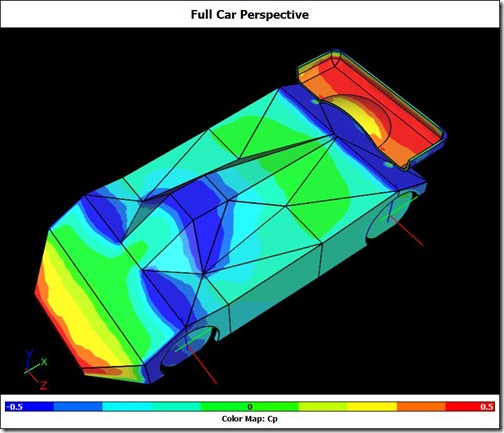
Mini-Z Caedium CFD SimulationMini-Z RC Model Caedium CFD Simulation: Image courtesy of Fernando Freitas

CFD for Solar Panels

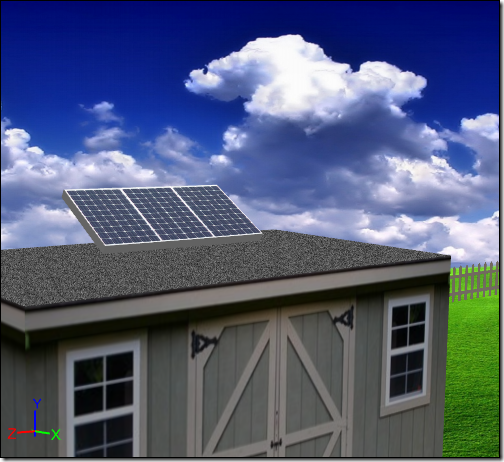
Solar panels are solid-state, right? No moving parts and certainly no fluid flow - unless you count the rivers of electrons flowing in a semi-conductor. So what role is there for Computational Fluid Dynamics (CFD)? Once installed, how can you be sure that those brackets holding the panels in place are strong enough? Or even if your roof is strong enough to cope with the wind loading on the solar panels? Remain calm, CFD is here to help in the form of Caedium Professional.

Solar Panels on Shed RoofSolar Panel Mounted on a Shed Roof

F1 in Schools World Finals CFD Analysis

Brett Sizeland and his Basilisk Performance team won the Australian F1 in Schools title in March 2010, helped by Computational Fluid Dynamics (CFD) simulations performed in Caedium Professional. However, it doesn't end there, by winning the Australian title the team qualified for the F1 in Schools World Finals to be held September 20-22, 2010 in Singapore. Without pausing for breath, Brett set about designing a new car, with help again provided by Caedium CFD simulations.

Screencast of Flow Through a Pipe into a Box

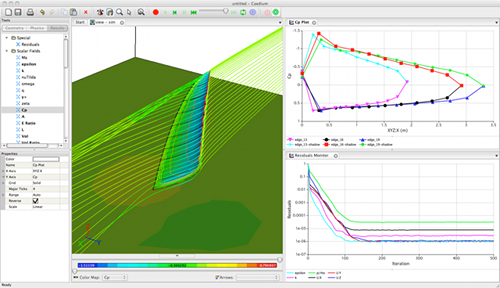
This screencast shows how to use Caedium Professional to create the geometry and simulate a steady-state turbulent CFD simulation of air flow through a pipe into a box. Also you will see how to create velocity vectors and particle tracks within the flow volume and monitor residuals as the simulation converges.

Open Wheel Race Car CFD Analysis

Open wheel race cars, such as those found in Formula 1 (F1), are characterized by complex aerodynamics. With geometry preparation, meshing, physics setup, solver control, and results extraction all combined in a single unified simulation environment, Caedium Professional is a good choice for assessing the aerodynamic performance of such cars using Computational Fluid Dynamics (CFD).

Electric Race Car CFD Analysis

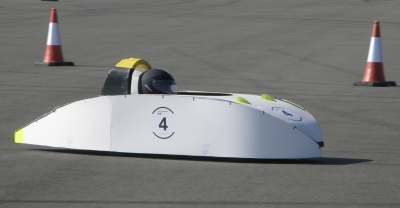
Many see the future of automobiles to be electric, so it's only natural to assume that the same may apply to motor racing. Luke Horsfall is one who believes electric race cars have a bright future, having set up Horsfall Racing (along with Laura Horsfall) to build electric race cars and race them in the F24+ electric race car class in the UK. The restrictions of this particular formula keep budgets and speeds relatively low (at least by Formula 1 standards). Making best use of the limited power in F24+ is crucial, and that places the emphasis on low-drag, aerodynamic race cars. I bet you can guess where this is heading - this is territory ripe for Caedium's Computational Fluid Dynamics (CFD) capabilities.

Super Swoosh Super Swoosh:Horsfall Racing's 2009 Electric Race Car

F1 in Schools Dragster v2.0 CFD Analysis

After reviewing the Caedium RANS Flow results posted in "CFD Analysis of an F1 in Schools Dragster," Brett Sizeland, Basilisk Performance team's chief designer, has been busy updating his F1 in Schools CO2 dragster design. Using the same geometry preparation process, physics setup, and post-processing, all within Caedium's unified simulation environment, we were able to rapidly perform the new simulation and extract the flow results presented here.

F1 in Schools v2.0 DragsterF1 in Schools v2.0 Dragster

F1 in Schools Dragster CFD Analysis

F1 in Schools is an international competition for student teams (aged 9-19) to design, analyze, build, and race CO2 jet-powered cars (dragsters). Beyond promoting Formula 1 (F1) to the next generation of fans, F1 in Schools aims to give a flavor of running an F1 team by exposing students to finance, marketing, and engineering. Of course the most exciting area (as in F1) is engineering, where students get to use state-of-the-art 3D CAD/CAM software to design and build their dragsters. Performance optimization through analysis of the dragster design is also encouraged, which inevitably leads to Computational Fluid Dynamics (CFD).

Basilisk Performance CO2 Dragster Basilisk Performance's 2008 CO2 Dragster

Cyclone Separator

Cyclone separators are used in many industries to separate particles from a fluid, where the fluid is usually air or water. The types of particles vary widely, from wood chips to dust. You can find cyclones in a variety of places and industries.

Syndicate content