What is Computational Fluid Dynamics?
Computational Fluid Dynamics, also known as CFD, is the digital equivalent of a real world wind tunnel or flow bench. With CFD you can simulate the air flow around a racing car, the water flow through a heating system, and a whole host of other applications wherever a gas and/or liquid (including multiphase) flows. From your CFD simulation you can determine flow quantities, e.g., lift, drag, pressure loss, velocity profiles, and pressure distributions, to help guide your design.
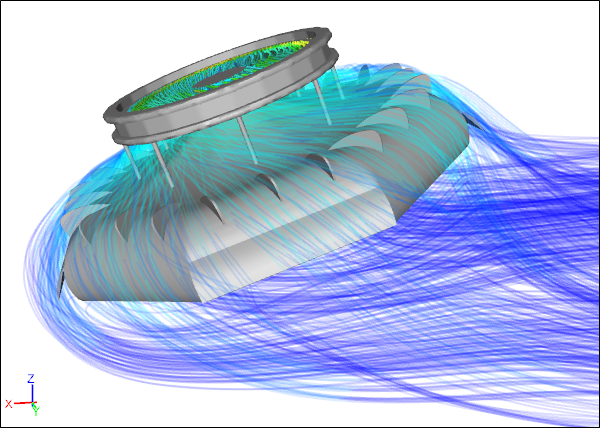 CFD Simulation of an Unusual Drone Design